Methodology
How we test: the CodoPlayer lab and its limits
Insights are written by the people who build CodoPlayer. This page says what our lab has in it, how we turn a test into an article, and the lines we do not cross.
Who writes Insights
Insights are written by the CodoPlayer team: the people who build, test and support the CodoPlayer apps for Android TV, phones, computers, Samsung TVs and the web. Articles appear under the team's name. Each one starts from something we ran ourselves, and each one says, in a box at the top, what was tested, where, when it was last checked and what it did not cover.
Our guides answer how-to questions about the apps. Insights are different: they report what we found when we tested a platform, a format or a problem in our own lab.
What is in our lab
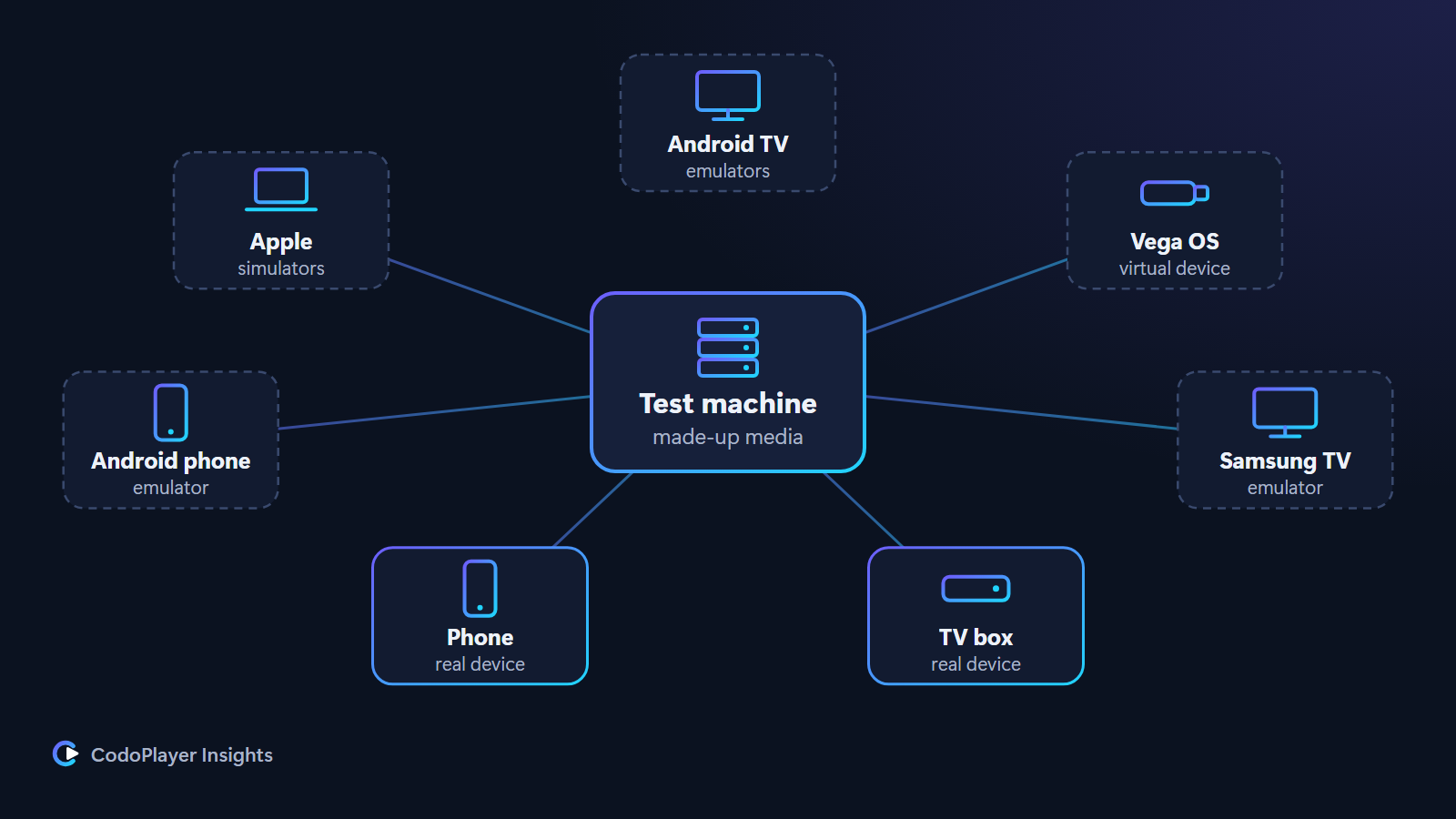
- Android TV emulators on several Android versions, including Android 10 and Android 16, for the Android TV app.
- An Android phone emulator for the phone app.
- Samsung's Tizen TV emulator for the Samsung TV app.
- Amazon's Vega Virtual Device, the emulator in Amazon's Vega SDK, for Fire TV devices that run Vega OS.
- Apple's simulators in Xcode, for our work on Apple devices.
- Two real devices: an Android TV box built on an Allwinner chip, and a Samsung Galaxy A05 phone.
- A test machine of our own in the lab that serves made-up streams, made-up playlists and made-up TV guides, so every test can be repeated with the same input.
Emulators are not the same as the devices people own. When an article's result comes from an emulator, the article says so, and it says what a real device could do differently.
How a test becomes an article
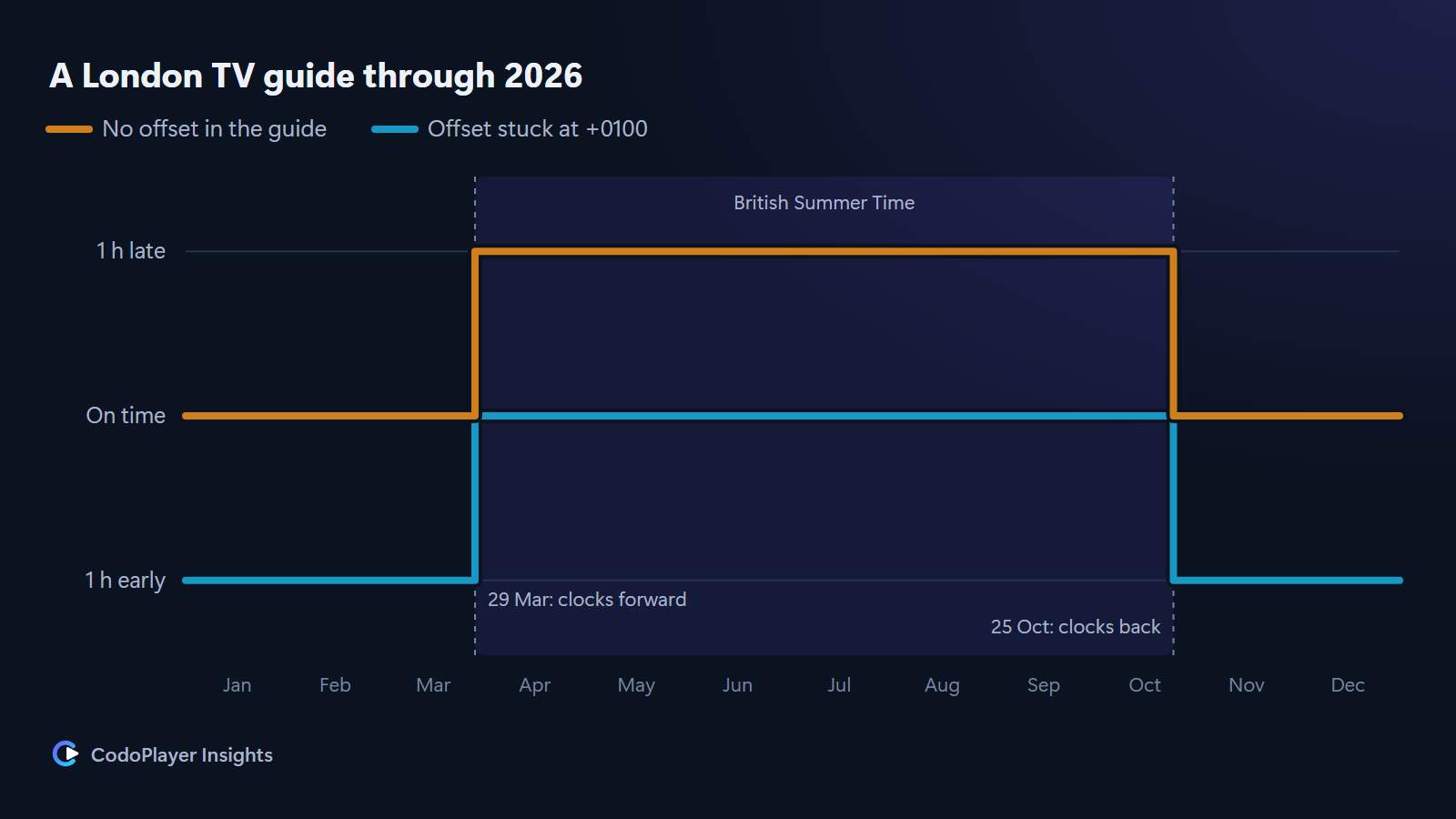
- A question from our work. Most articles start with something we had to answer while building the apps, such as why a guide shows the wrong hour or what a new TV platform can play.
- A reproduction in the lab. We rebuild the problem with made-up media from our lab's test machine and run it on the emulator or device that matters.
- A written record. Results go into our lab notes with the software version, the date and the exact output, before any article is drafted.
- Public sources for what we cannot test. Facts about devices we do not have, such as which models run which system, come from the platform maker's own public pages. The article quotes them, links them and gives the date we read them.
- Limits stated. Every article ends with what the test did not cover.
What we never do
- We never use a viewer's playlist, guide address, account or any other data in a test or an article.
- We never name viewers, customers or the services they watch.
- We never publish a number we cannot trace to our lab notes or to a public source listed in the article.
- We never change a date to make an article look newer.
Dates and corrections
Published is the day an article first went up, and it never moves. Updated appears only when the words of the article change. Last checked is the day we last re-ran the test or re-read its sources.
If you find a mistake, tell us through the feedback page. We correct the article and add a dated note that says what changed.